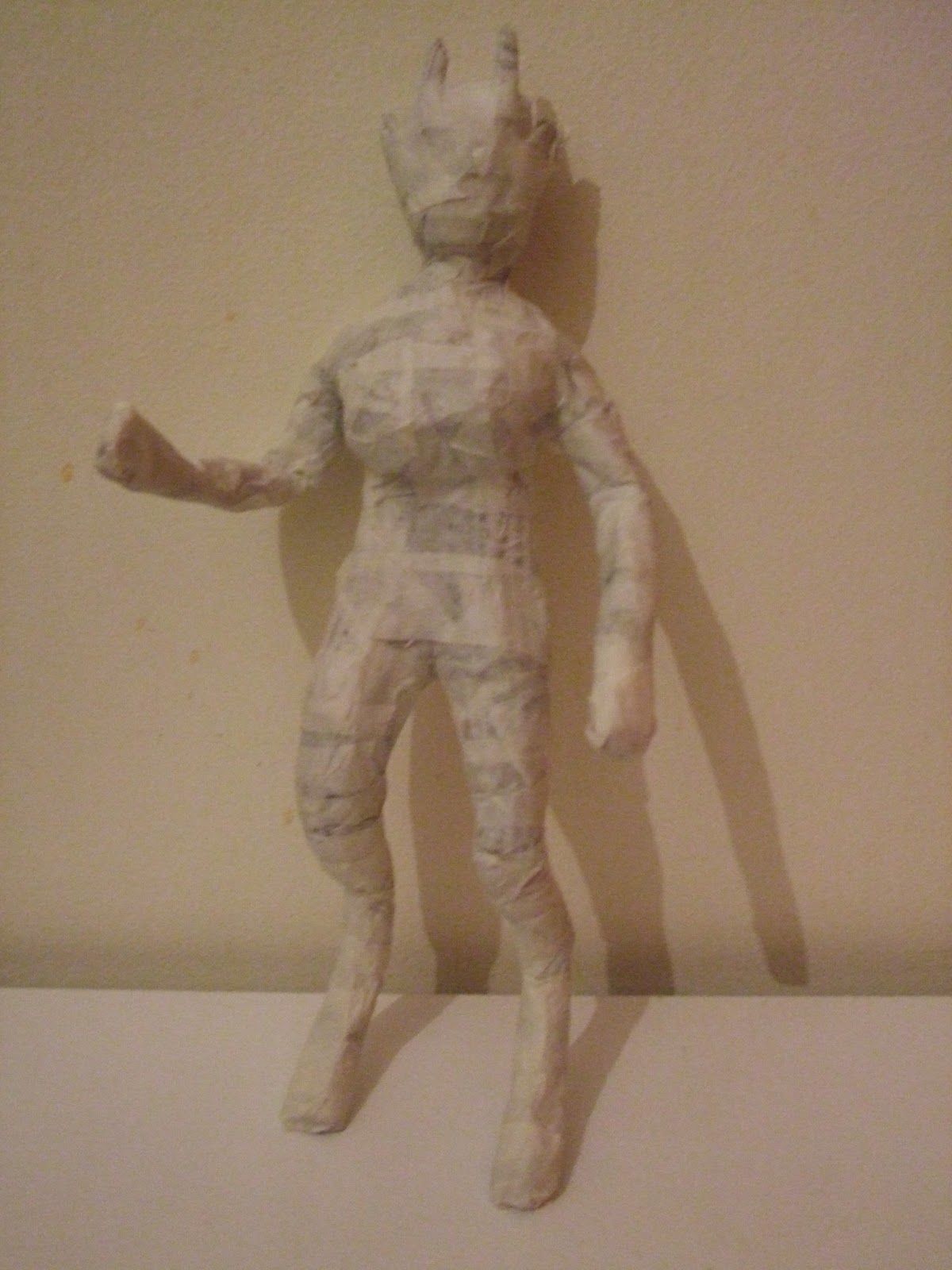
This week I've continued experimenting with using newspaper to build bulk around a wire armature as a method of modelmaking. I then covered the newspaper with masking tape to create an even surface which I may paint on.
The advantage I have found with this method is that the armature is still slightly posable underneath the newspaper, allowing for adjustments in the model's stance. This will allow for adding clothing to the model. The disadvantage to this method is the trial and error nature of how much newpaper to bind to the armature and where, however I think this will become easier to judge with practice.
So far I have found that creating models of figures at this scale has forced a compromise with the level of detail I can include. This has bought me to the conclusion that to provide lighting reference for the more detailed areas such as hands and faces I will make clay sculptures which I will light seperately, but in the same way as the figure used in the same composition. This will allow me to study more clearly the areas of light and shade, with the figure models acting as overall lighting reference for the figures.
The next step in my experimentation is to experiment with clothing my models, as the creases and folds of clothing provide another area where the detailed study of the effect of light will help to add realism to my compositions. To make my light studies easier I'll begin by making the clothing from basic white fabric to observe the tonal values, moving on to looking at the effect of coloured light sources on the colour of coloured clothing.